
Qatari LNG Visionary’s Passing Feels Like the End of an Era
Abdullah bin Hamad Al Attiyah, known as the “Godfather of LNG,” died on Wednesday. The architect of Qatar’s rise to global energy superpower and a former president of OPEC during some of the group’s most fractious years, was ahead of his time.
But Attiyah would say his reputation as the architect of Qatar’s LNG industry came partly by accident. In the early 1990s, LNG was a tough sell with international investors. The technology was expensive and prospective partners questioned the economics of chilling gas to a liquid then shipping it to customers half a world away.
“When I became oil minister in 1992, Qatar was a very depressed country,” Attiyah would later write. “The government at the time had no money to finance any projects and told us go do it your own way, don’t come to us asking for funding.”
An alternative vision to exporting LNG was to use Qatar’s newly discovered non-associated gas in the Persian Gulf to build a regional pipeline network. Qatar’s gas would eventually reach the UAE and Oman through the Dolphin pipeline, but the project’s wider regional potential to provide energy security across the Gulf went unrealized.
Instead, LNG took off, transforming Qatar into one of the world’s wealthiest countries. Between 1996 and 2025, when the first cargo departed Qatar for Japan, an estimated $125 billion of investment flooded into the Qatari gas industry.
“Attiyah was a giant of global energy,” Bill Farren-Price, Head of Gas Research at The Oxford Institute for Energy Studies told Dow Jones Energy. “He set the course for Qatar as a global LNG exporter and one of the world’s dominant players in that sector. It was a strategic bet that played off well until the crisis hit.”
Relationships
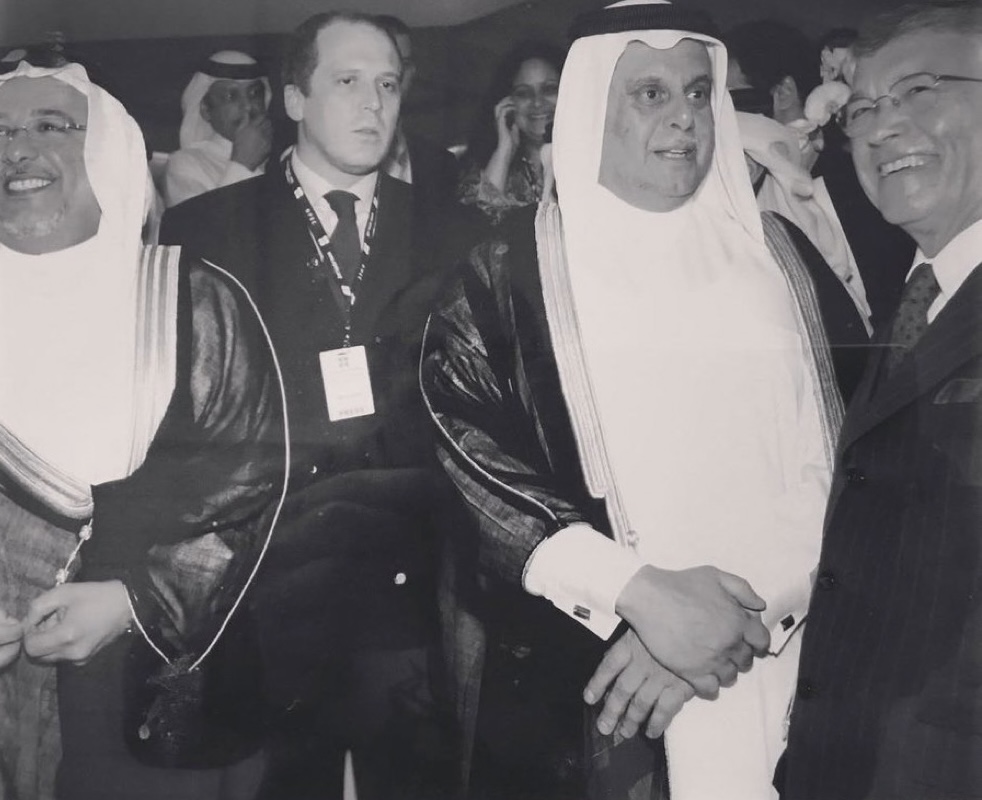
As Qatar’s representative at OPEC for 18 years and the group’s president in the mid-2000s, Attiyah helped to ease tensions between fractious members and the press. He would later be offered the position of secretary general, a key role in the group to bridge divides. Known for spending months on the road, his aides would complain about the time he dedicated to meeting Qatar’s far-flung LNG customers.
After stepping down as Qatar’s energy minister in 2012, Attiyah established his own energy think tank based in Doha. Six years later, Qatar exited OPEC and focused entirely on developing its own energy industry outside the constraints of quotas, a move followed by Abu Dhabi this month.
At a moment of crisis when the region’s status as a reliable supplier of energy is under threat following the blockade to the Strait of Hormuz and attacks on energy infrastructure, Attiyah’s passing also feels like it could mark the end of an era for LNG from the region.
Major energy consuming nations such as China, India and Japan may seek longer-term relationships with alternative suppliers like Russia and the US, or turn back to burning more coal, which can’t so easily be disrupted by drone attacks. Unless the next generation of Gulf energy leaders can rebuild trust and relationships, Attiyah’s work 30 years ago may have been in vain.
“Qatar has never faced a more immediate and long term threat to its central business of LNG,” added Farren-Price. “How do they keep gas in the game? This has done some damage to Gulf producers as a secure source of supply.”
–By Andrew Critchlow, andrew.critchlow@dowjones.com; Editing by Frank Tang, ftang@opisnet.com
© 2026 Oil Price Information Service, LLC. All rights reserved.