CBAM 101: The EU’s Carbon Border Adjustment Mechanism—and its Changes—Explained
The European Union’s carbon border adjustment mechanism (CBAM) will go into its definitive phase on January 1, 2026, requiring EU importers of specific sectors to pay for the embedded emissions of their products.
The CBAM has been live since October 2023 as EU importers have had to file quarterly reports on the embedded emissions data of certain products, including if there has already been a carbon price paid on these products at their point of origin.
However, the CBAM has undergone critical changes of its own in 2025 as the EU grapples with the enormity of the task in requiring importers to obtain emissions data from across their entire supply chain and as political pressure has mounted over overburdening small- and medium-sized companies with administrative demands.
Here we’ll go over the foundations of the CBAM, its changes and what EU importers—and companies exporting to the bloc—need to know and can expect in the coming months when the CBAM kicks in on January 1, 2026.
What is the EU Emissions Trading System?
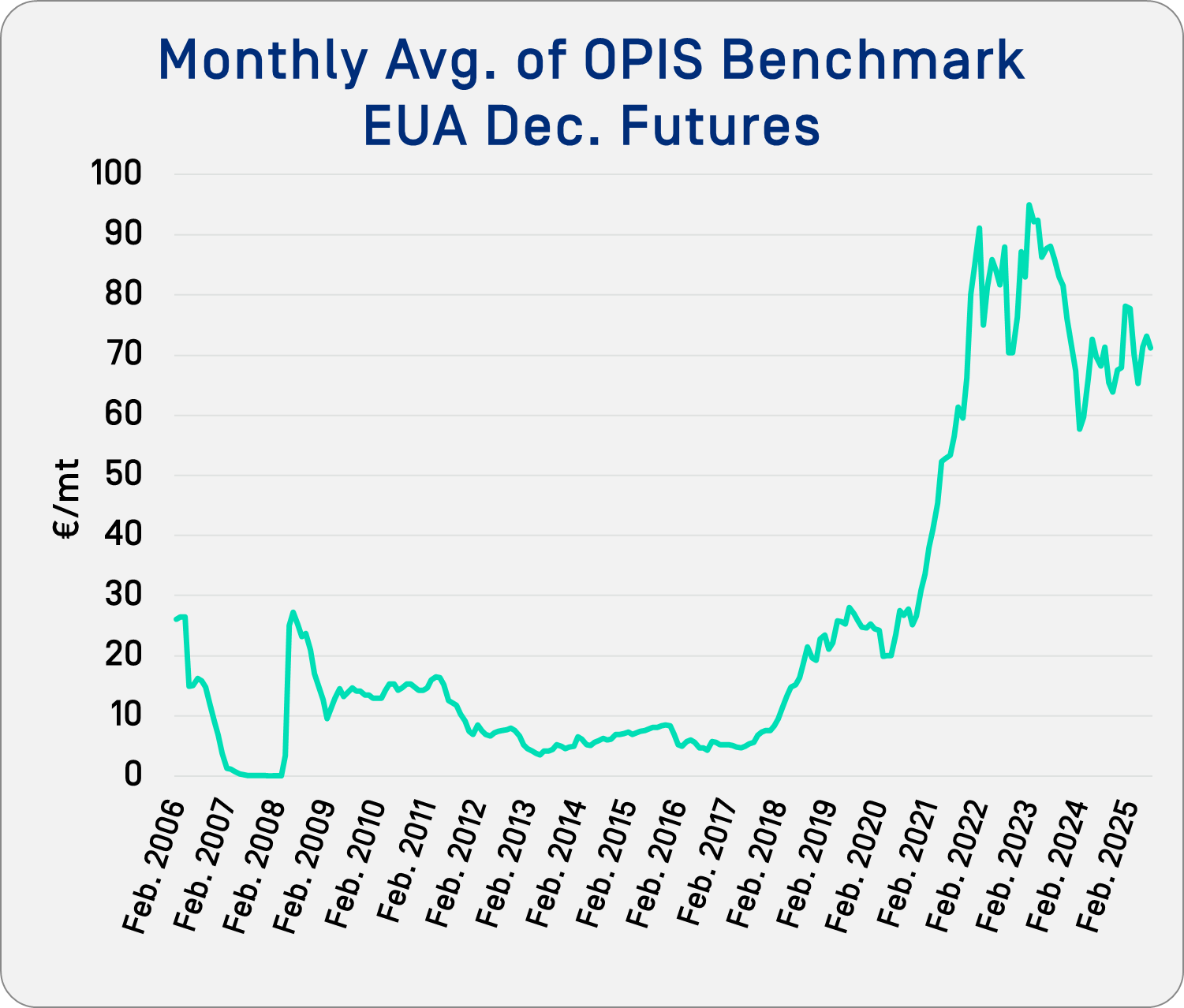 To understand the foundation of the CBAM, we need to understand the EU Emissions Trading System (EU ETS), the carbon market that will determine the price of CBAM Certificates, or what importers will need to purchase to cover the cost of emissions embedded within their products.
Since 2005, the EU has required industry, the power sector and others within its borders to pay a market-based carbon price under the EU ETS. In theory, the EU ETS aims to incentivize manufacturers to decarbonize by applying the “polluter pays” principle, meaning that emitters should pay for the negative effects of pushing out more carbon dioxide into the atmosphere.
The EU ETS is a “cap-and-trade” system, meaning there is a limited number of EU carbon allowances (EUAs). Throughout this time, the price of pollution, or EUAs, is expected to increase as the supply of EUAs dwindles.
In essence, the less carbon you emit, the lower your carbon cost. The price of EUAs is a market-based incentive; EUAs have reached as high as €101.95/mt ($119.23) in August 2022.
What is the CBAM?
Over the last 20 years, the EU ETS has grown to include more sectors under its scope, including the domestic and international maritime shipping industry and aviation. EU industry and other sectors covered by the EU ETS have been subject to a carbon price for two decades and some companies have considered leaving the bloc to set up their operations in a country without carbon pricing mechanisms, also known as “carbon leakage.”
To prevent carbon leakage, the EU provides hard-to-decarbonize industries like cement and steel producers with free EUAs on an annual basis based on efficiency benchmarks in order to provide support but also incentives for these industries to lower their carbon emissions.
However, to prevent further carbon leakage and to level the playing field for EU industry, the European Commission has established the CBAM. By requiring EU importers and exporters to the bloc to lower the carbon emissions within their products or face higher carbon costs, decarbonization can be achieved on a grander scale.
Soon, anyone exporting to the EU will need to mind the EU carbon price—which, according to various analysts, could reach three-figure prices before the end of the decade.
What Will the CBAM Do?
Since October 2023, the CBAM has applied to seven carbon intensive sectors: aluminum, iron, steel, cement, electricity, hydrogen, and ammonia. EU importers of these products or their raw materials have filed quarterly reports since then detailing the emissions of their supply chain.
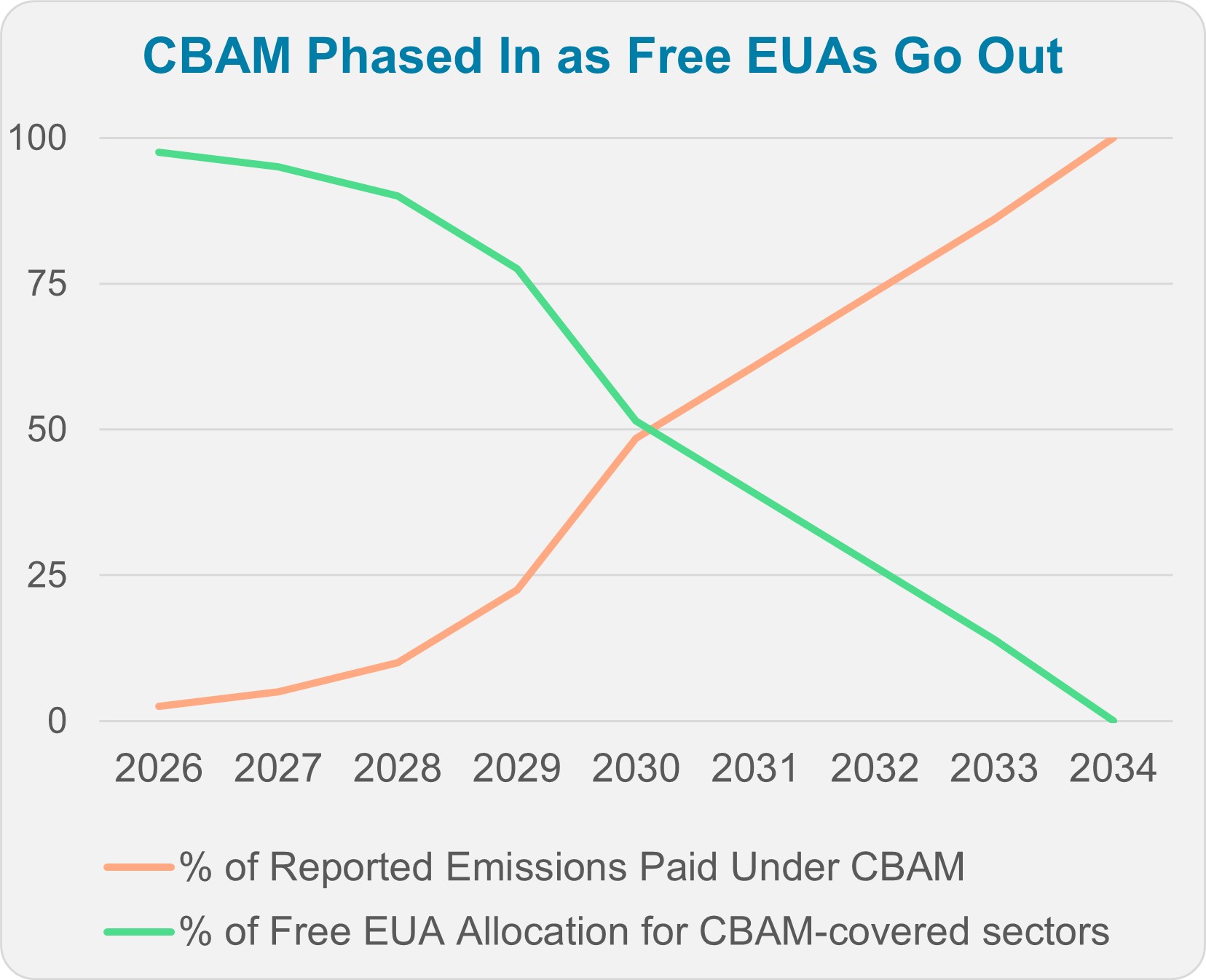 From 2026 to 2034, the EU will require importers in the EU to pay a growing percentage of the EU carbon price on these products. As the CBAM rate is gradually phased in from 2.5% in 2026 to 100% in 2034, EU industry will see its free EUA allocation reduced and phased out entirely by 2034.
Essentially, as free EUA allocation to EU industry is phased out, CBAM Certificates—what EU importers must purchase to comply with their annual CBAM obligations—will be in.
Additionally, the scope of the CBAM is expected to grow to include more sectors, especially chemicals and plastics by the end of the decade. The European Commission has laid out its goal to include all the industries presently covered by the EU ETS under the scope of the CBAM in the coming years.
What Amendments Have Been Made to the CBAM in 2025?
Since the CBAM entered its transitional phase in October 2023, there have been key changes proposed to the CBAM which the European Council and European Parliament are expected to formally adopt by September. These changes came about as part of the European Commission’s omnibus proposal to streamline and simplify regulations across the bloc.
These include:
- The threshold for compliance will change from being a financially-based €150 threshold to a mass-based threshold of 50 metric tonnes per importer. In an effort to lower administrative costs for small- and medium-sized enterprises, the European Commission opted to alter the compliance threshold from a monetary shipment value to a mass-based equivalent of 100 metric tonnes of carbon dioxide per product. The European Commission has argued that changing this threshold will exempt around 90% of enterprises originally included in the initial CBAM compliance threshold but still cover 99% of all the embedded emissions imported.
- Purchase of CBAM Certificates Moved to February 2027: CBAM Certificates were originally planned to go on sale starting in 2026, allowing entities to purchase these ahead of the annual compliance deadline. The European Commission has said that this new date would allow businesses more time to prepare ahead of 2026 as EU importers surrender the necessary CBAM Certificates in 2027 for their embedded emissions from 2026.
- Annual compliance deadline, or when CBAM Certificates must be surrendered, will change from May 31 to August 31.
- Price of CBAM Certificates based on quarterly average EUA auction prices in 2026 and weekly average auction prices from 2027 onwards. The price of CBAM Certificates will be directly linked to EUA prices. However, for 2026, the European Commission has proposed that CBAM Certificates be based on the quarterly average auction price of EUAs and eventually weekly for embedded emissions in 2027 onwards, which could be more volatile for CBAM Certificate prices.
These changes have not yet been finalized.
According to the European Council, these provisional changes need endorsement from the Council and the European Parliament prior to formal adoption which is expected by September 2025.
What Will the Next Few Years Look Like for CBAM?
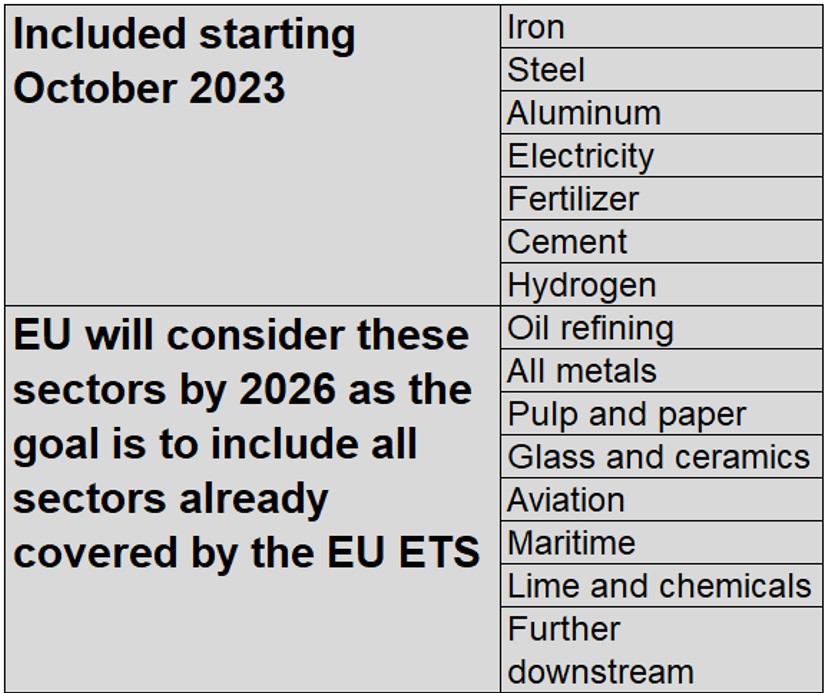 The transitional phase, from Oct. 1, 2023, to Dec. 31, 2025, will correspond to sectors with the highest risk of carbon leakage and with the highest carbon intensity in their products: iron and steel, cement, fertilizers, aluminum, hydrogen and electricity.
The EU has said that the CBAM would eventually cover more sectors and that indirect emissions would also be included.
The full CBAM will come into force on Jan. 1, 2026.
“With this enlarged scope, CBAM will eventually—when fully phased in—capture more than 50% of the emissions in ETS-covered sectors,” the EU said. “The objective of this transition period is to serve as a pilot and learning period for all stakeholders (importers, producers and authorities) and to collect useful information on embedded emissions to refine the methodology for the definitive period.”
By 2030, the EU will likely extend the CBAM to cover all the sectors already included within the EU ETS such as oil refining, upstream, all metals, pulp and paper, glass and ceramics, imports related to the aviation and maritime shipping sectors, and lime and chemicals.
Updated as of August 15, 2025